Something Is Living in Your Roof: A Joshua Homeowner's Order of Operations
Getting the occupants out is a wildlife job. Keeping them out is a roofing one. Why sealing the hole first is the mistake almost everyone makes, and what the roof needs afterwards.
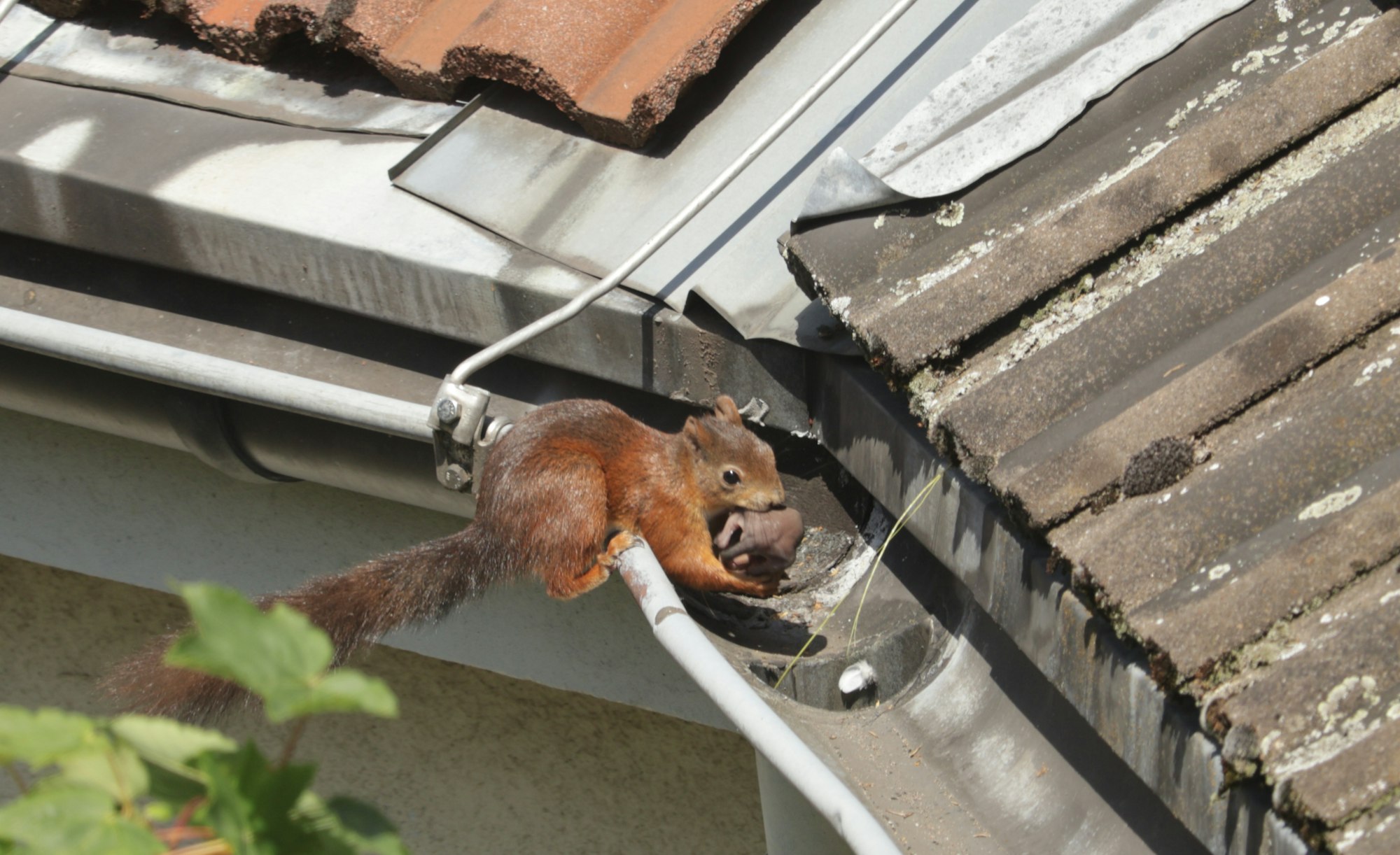
It usually starts at dusk. Something moves overhead, stops, moves again, and whoever is sitting underneath it decides it is probably nothing. A week later it is clearly not nothing, and by then whatever is up there has been working on the inside of the roof for a while.
Joshua sits where subdivisions meet pasture edge and tree line, which is excellent for wildlife and inconvenient for roofs. As nights cool through October, the warm, dry, undisturbed space under your decking becomes the best address in Johnson County. Getting the occupants out is a wildlife job. Making sure they cannot come back is a roofing one, and doing those two in the wrong order is how people end up doing both twice.
A Roof Has More Openings Than Most Owners Think
The roof reads as a sealed surface from the yard. It is not. Texas A&M AgriLife Extension's bat management guidance lists where animals actually get in, and the list is longer than most homeowners would guess: attics, under eaves, under shingles or siding, or in the wall spaces of buildings, plus chimneys, ceiling spaces, expansion joints and roof overhangs.
Larger animals need larger gaps but are better at making them. The City of Pearland's guidance on attic wildlife puts the motive plainly: the reason they have selected your attic is that they could gain access, and your attic is the safest place to keep their babies. A squirrel will widen a soft spot in a fascia board until it fits. A raccoon will simply lift a section of decking at an edge that was already loose.
- Soffit vents with corroded or missing screens, which are the single most common way in.
- Gaps where a soffit meets a brick or siding wall, especially at a roof-to-wall transition.
- Soft or rotted fascia, usually under a gutter that has been overflowing for years.
- Gable and ridge vents whose mesh has split, and turbine bases that have worked loose.
- The gap under a lifted first course of shingles at an eave, particularly where a limb rests on the roof.
Sealing It Up Is the Mistake Almost Everyone Makes First
The instinct is to find the hole and close it that afternoon. It is the wrong first move, and both the wildlife guidance and the city advice say so for the same reason. AgriLife's warning about bats is unambiguous about the outcome: you could permanently seal bats inside, killing them and causing odor and sanitation problems. The same logic applies to a squirrel's nest of young behind a soffit.
Pearland's advice is to let the animals move their young out on their own terms, giving them ample opportunity to do this, not blocking entrances and exits while they do, and putting dogs away so they are not harassed in the process. The city is also candid about the shortcut most people reach for: trapping is a very ineffective way to deal with raccoons and squirrels in attics. Sealing comes last, once the roof is genuinely empty.
Bats Are Their Own Category in Texas
If the tenants are bats, the rules change and so does the method. AgriLife's guidance is that bats in buildings occupied by people can be legally removed or evicted, but how matters: it is not legal to use pesticides against bats, and bat traps are described as inappropriate. The accepted approach is exclusion, which means letting them leave and preventing their return rather than catching anything.
In practice that means one-way devices placed over the openings they are actually using. The guidance is to place the tubes over the holes in the roof or soffit used by the bats, and to leave the devices up for at least one week during warm weather and two weeks in cool weather. Timing matters for a reason specific to this time of year: bats may not leave the roost on nights that are cooler than 50 degrees Fahrenheit, which in Johnson County rules out a fair number of winter evenings. While the devices are up, the rest of the roof gets sealed: the guidance is to seal all potential but inactive entry points using caulk, weatherstripping, flashing or hardware cloth.
Two safety points come with it. Neither adults nor children should handle bats, and a bat that is found on the ground is more likely than other bats to be sick or injured. That is a call to a professional, not a project for a Saturday.
Do Not Block the Ventilation While You Are Blocking the Animals
Here is where a wildlife fix quietly becomes a roofing problem. The openings animals use are frequently the openings the attic breathes through, and the temptation is to cover a chewed soffit vent with a solid board. The Asphalt Roofing Manufacturers Association sets out what that costs. Attic ventilation maximizes the service life of asphalt roofing materials, improves the energy efficiency of the building and removes excessive moisture in the attic space, reducing the likelihood of mold and mildew growth.
The numbers are specific. ARMA describes a minimum net free ventilation area equal to one square foot per 150 square feet of attic floor area, with a reduction to as low as one per 300 permitted where intake and exhaust vents are properly located. The balance matters as much as the total: intake vents should comprise 50 to 60 percent and exhaust vents 40 to 50 percent, and the intake amount should never be less than the exhaust amount. ARMA also notes that restricting airflow has consequences overhead, because moisture fluctuations can cause deck components to expand and contract and buckle the overlying shingles.
So the fix is hardware cloth behind the vent, not plywood over it. The opening stays open; the mesh decides what fits through it.
What the Roof Itself Usually Needs Afterwards
Once the attic is empty, the damage list tends to be the same every time: chewed or rotted fascia where the entry was widened, a soffit panel that no longer sits properly, torn vent screens, and a lifted course of shingles at the eave where something levered its way under. None of that is dramatic on its own, and all of it is an open door for the next animal that comes along, which is why it is worth doing as one job rather than patching the obvious hole.
It is also worth asking why the fascia was soft in the first place. Rot at the roof edge is almost always a water problem before it is a wildlife problem, and a gutter that has been spilling behind itself for a few seasons will produce exactly the soft board a squirrel needs. Fixing the timber without fixing the drainage buys you a year.
The Order That Actually Works
Four steps, and the order is the whole point. Identify the species before anything else, because bats, squirrels and raccoons each have a different legal and practical answer. Get them out by exclusion rather than by sealing, and confirm the space is genuinely empty before closing anything. Close the openings with mesh that keeps the ventilation working, not with solid board. Then repair what the animals and the water did to the roof edge, and check the gutter that softened it.
If you are at the last two steps, or you are not sure whether what you can hear has already got into the decking, a free roof inspection around Joshua will photograph the soffits, the vents and the eave courses so the roof repair is scoped against what is actually there rather than what you can hear from the hallway.
Want to know how they got in?
The roof check is free, covers every soffit, vent and eave course, and you keep the photographs.
Close the Door Properly
Half an hour, no cost, and photographs of every opening an animal could use, with an honest answer about what the roof edge needs.