Roof Replacement Cost in Texas: What Sets the Price on a Joshua Home
Squares, pitch, old layers, decking, material class, ventilation and the city paperwork: how each one pushes a Joshua reroof quote up or down, and what to check on the estimate.
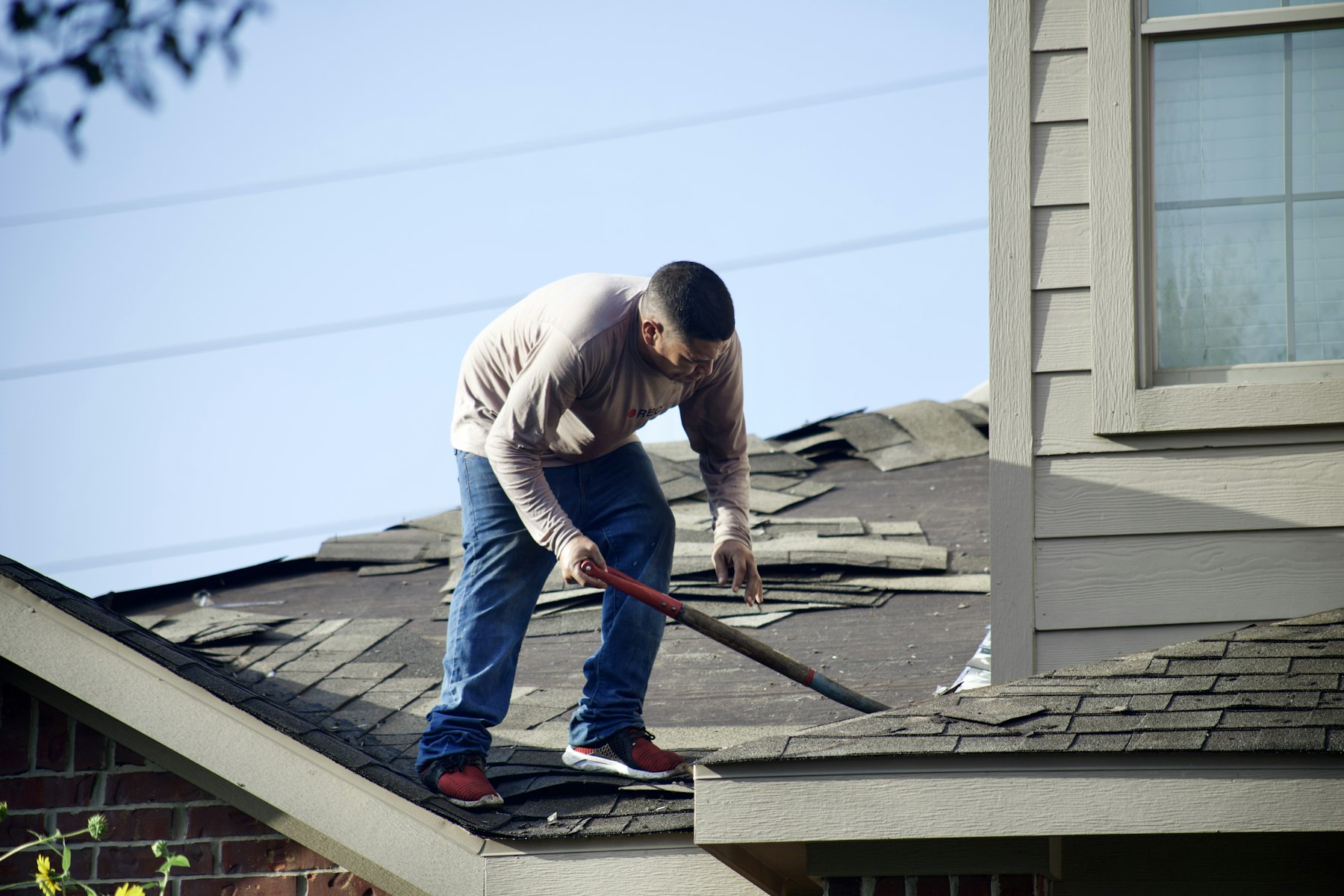
Roof replacement cost in Texas is hard to pin down: two honest quotes on the same Joshua house can sit thousands of dollars apart. The gap nearly always comes from a few measurable things, namely the real square count, the pitch, what sits under the old shingles, the material class and what the job must include to pass inspection. Here is how each one moves the number.
Key takeaways
- Roofs are priced by the square, which is 100 square feet of roof surface, not by the floor area of the house.
- Steep pitch, a second story and a cut-up roof with many valleys all slow the crew down and raise labor cost.
- Every extra layer of old shingles adds tear-off labor, weight and disposal, and rotten decking is only found once the roof is open.
- Material class is the biggest single lever: architectural asphalt, impact-rated shingles and metal sit at very different price points.
- Flashing, pipe boots, underlayment and ventilation are small line items that decide whether the new roof lasts.
- In Joshua, permits and contractor registration run through City Hall's Development Services office.
What does a roof replacement cost in Texas right now?
Published figures give a wide band rather than a single price, and that is the honest answer. Angi's roof replacement cost guide puts the national average at about $9,609, and a typical range of $4 to $11 per square foot of roof. The 2025 Cost vs. Value report from the Journal of Light Construction prices a much larger job, a 30-square tear-off to bare sheathing with 235-pound fiberglass asphalt shingles, two skylights and a vented ridge, at $31,871 as a national average.
The two figures describe different roofs: a simple single-layer gable on a Joshua ranch house is a far smaller job than a 30-square hip roof with skylights. Neither source publishes a Johnson County figure, so use them to sanity-check a quote, not as a price list or as this company's rates.
How do roofers measure a roof, and why do squares matter?
A roofing square is 100 square feet of roof surface, and nearly every material and labor price in a quote is built on that unit. A roof always has more surface than the house has floor space, because the slope adds area and the eaves overhang the walls. That is why a quote built from the house's listed living area will come in low.
Waste is the second part of the count. Shingles get cut at every hip, valley and wall, so a roof with many facets uses more material than a plain gable of the same footprint. When comparing quotes, check that both list a similar number of squares; one that is several squares lighter may reflect a measuring shortcut rather than a better price.
Why does roof pitch change the price?
Pitch changes the price because a steeper roof is slower and riskier to work. Pitch is rise over run, so a 6/12 roof climbs 6 inches per 12 across. Past roughly that slope, crews need roof jacks, toe boards and harness anchors, bundles must be staged, and daily output drops.
Height compounds it. A second story means longer ladders and more time moving debris to the ground, and a broken-up roofline with dormers and valleys takes hand work at every transition. That labor shows up in the quote even when the square count looks modest.
What does tear-off add, and why do old layers matter?
Tear-off is stripping the existing roof down to the deck, and its cost scales with how much is up there. One layer is routine. Two or three mean more labor, heavier loads and a bigger dumpster, since disposal is often priced by weight or load. The Cost vs. Value benchmark above assumes removal to bare sheathing.
Laying new shingles over old ones looks cheaper on paper, but it hides the deck and adds weight to the framing. The roof replacement page on this site describes a full tear-off to bare decking with no overlays, so check that every quote includes removal of each existing layer.
When does decking replacement enter the bill?
Decking replacement enters the bill when the crew finds rotten or soft boards after the old roof comes off. It is the one cost nobody can fully see in advance, because damage often sits under shingles that still look fine, usually around chimneys, valleys and plumbing vents where slow leaks have run for years.
The fair way to handle it is a unit price agreed in advance, usually per sheet of plywood or OSB, with replaced boards documented. The replacement page here says decking is checked board by board and replaced boards are listed on the invoice. A quote with no decking line is not cheaper; it just has not mentioned the most common surprise.
How much does the material class move the number?
Material class is usually the largest single swing in a roof replacement cost in Texas. Angi's installed ranges show asphalt shingle roofs at roughly $5,800 to $20,000 and metal at about $5,700 to $25,000, with heavy overlap because roof size drives so much of the total. The Cost vs. Value report is starker on a like-for-like job: its national metal roof replacement averages $51,865 against $31,871 for asphalt.
Within asphalt there are tiers. Three-tab shingles are cheapest; architectural shingles are thicker with longer warranties; impact-resistant shingles cost more again, and in a hail-prone part of Texas it is worth asking your insurer whether your policy treats them differently. Metal roofing sits above that, with a higher upfront cost and a longer service life.
Color matters too. The U.S. Department of Energy's guidance on cool roofs notes that a reflective roof can stay more than 50 degrees Fahrenheit cooler than a conventional one and often costs no more than a standard roof when the roof is being replaced anyway, which makes replacement the cheapest moment to choose it under a Johnson County summer sun.
Do ventilation, flashing and the small parts change the total?
Yes, and they matter more to the roof's life than their invoice size suggests. Underlayment, valley membrane, drip edge, wall and chimney flashing, pipe boots and ridge vent each add a modest amount. Reusing old flashing or cracked boots is one way a low quote stays low, and those parts are where many leaks start.
Ventilation is the piece people overlook. A ridge vent only works with enough soffit intake to feed it, and a hot, poorly vented attic shortens shingle life. Fixing an unbalanced setup adds cost, but far less now than after the new roof is on; the replacement page here says ridge ventilation is checked against attic intake.
What do permits, registration and disposal add in Joshua?
Permits are a small share of the total but belong in the quote. Nationally, Angi reports roofing permits running from about $100 to $1,400 depending on the city. Inside Joshua city limits, building work runs through Development Services at City Hall on South Main Street, and the city's permitting forms and applications page lists both a Building Permit Application under its Building Add/Alter section and a separate Contractor Registration Application.
The city adopted its building codes with local amendments through Ordinance 653-2016, and the permit clerk can confirm what a reroof needs at a given address. Many homes with a Joshua mailing address sit outside city limits in unincorporated Johnson County, so ask who has jurisdiction and who is pulling the permit.
Disposal and cleanup finish the list: dumpster, haul-off and a nail sweep. A quote that leaves them out has moved them to a later change order.
How does each cost driver move the number?
The table pulls the drivers together and shows what to check on any written estimate.
| Cost driver | What raises it | What to check on the quote |
|---|---|---|
| Roof size (squares) | More surface, overhangs, many facets and cut waste | Square count close to other bids; linear feet of ridge and edge listed |
| Pitch and height | Slopes past about 6/12, second stories, dormers | Whether steep or two-story labor is priced separately |
| Tear-off layers | Two or more old layers; heavier disposal loads | Removal of every layer down to the deck is included |
| Decking | Rot, soft spots, plank decking under the shingles | A per-sheet price agreed in advance and photos of replaced boards |
| Material class | Impact-rated shingles or metal instead of standard architectural | Exact product line and warranty named, not just a color |
| Ventilation and flashing | Unbalanced intake and exhaust; new flashing and pipe boots | New metal and boots listed rather than reused parts |
| Permits and disposal | City permit, registration, dumpster and haul-off | Who pulls the permit and whether cleanup is included |
Where your Joshua quote will swing the most
For most homes around Joshua, three things decide where the final figure lands: the material you choose, the number of old layers coming off, and how much decking turns out to be damaged. The first is your call and can be priced exactly before work starts. The second can usually be confirmed from the attic or a lifted shingle tab. The third is the true unknown, so the protection is a per-sheet decking price written into the agreement rather than a surprise later.
If you want those three questions answered for your own house, a roof inspection is the sensible first step, and the roof replacement page lays out what a full tear-off from Joshua Roofing includes line by line.
Want your own roof looked at before you compare bids?
The free roof check photographs the field, valleys, penetrations and edges, with an attic look where possible, so every line on a quote has something real behind it.
Put real numbers behind your roof decision
About half an hour on your roof, a line-item estimate if you want one, and the photos are yours to keep whatever you decide.